Olalab Studio | Photography and Visual Storytelling in Amsterdam


Maternity posing in Amsterdam homes. Finding ease and light indoors
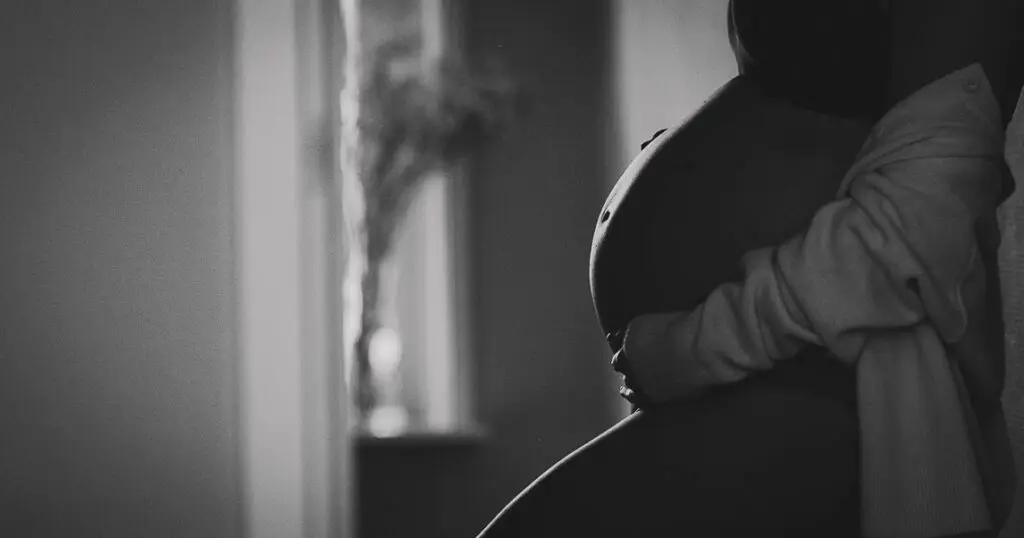
Why Amsterdam homes shape the way we pose
There is something quietly revealing about photographing pregnancy at home. Especially in Amsterdam, where houses carry their own logic. Narrow staircases. Windows that stretch tall rather than wide. Light that moves softly across brick, plaster, wood, and linen.
When I step into a home for a maternity session, I am not looking for perfection. I am listening. To the way the space breathes. To how the expecting mother moves through it. To where she pauses without thinking.
Maternity posing in Amsterdam homes is not about directing the body into shapes, but about responding to the spaces people actually live in.
That impulse changes subtly from neighbourhood to neighbourhood. In De Pijp, it often happens near tall windows overlooking the street, where light comes in fast and close and life feels present just outside the glass. In Oud-Zuid, homes tend to open up more quietly, with wider rooms, softer transitions, and space that invites slower standing poses or seated moments that stretch out in time. In Amsterdam West, especially in post war apartments, the body often settles into practical gestures. Leaning against a kitchen counter. Sitting near a balcony door. Moving through the home rather than pausing inside it.
Each area carries its own architecture, light, and rhythm, and the body responds to that without instruction. When posing follows the logic of the home instead of fighting it, the images begin to feel specific. Not just to pregnancy, but to place.
At OLA LAB, home sessions have become a practice of attention. This post gathers what I have learned by watching closely. What works. What settles people. What allows the images to feel honest rather than styled
Amsterdam homes are rarely blank canvases. They are layered. Often compact. Often vertical. Light comes from one side more than the other. Furniture is chosen carefully because space demands it.
This means maternity posing here needs to be responsive rather than imposed.
Instead of wide dramatic gestures, smaller shifts matter more. A turn of the shoulder. A hand resting on a window frame. A lean against the kitchen counter where mornings already happen.
Homes in this city tend to ask for calm poses that fit into the rhythm of daily life. Standing near a window. Sitting at the edge of a bed. Walking slowly from room to room. These are not setups. They are recognitions.
The body does not need to perform. It needs room to be.
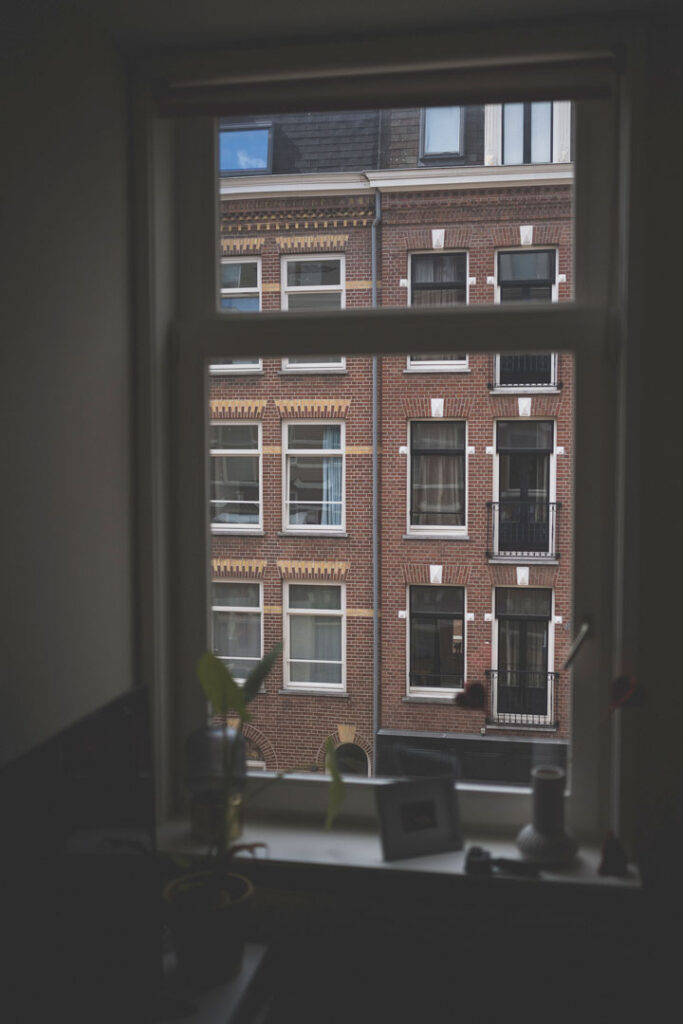
Start with where the light already lives
Before thinking about posing, I always find the light.
Amsterdam light is gentle but directional. It enters through tall windows and lingers. Often the brightest place in the home is not the living room but a bedroom or hallway.
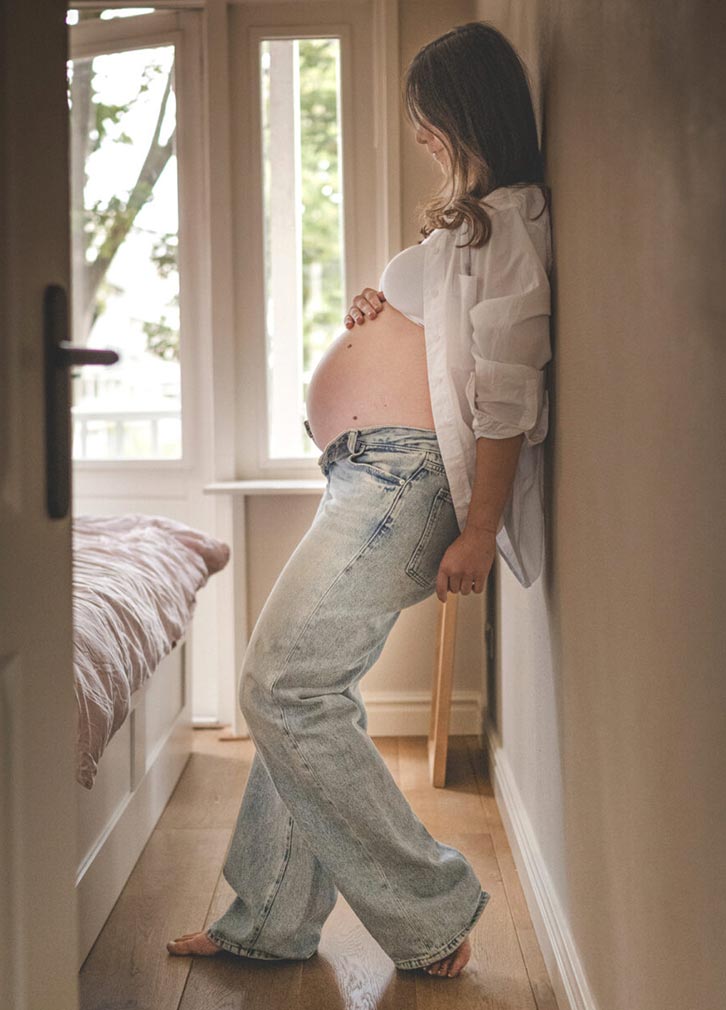
For maternity posing, this light does half the work. A body turned slightly toward it softens naturally. The belly finds its curve without emphasis. The face relaxes.
I often invite someone simply to stand where the light feels pleasant on their skin. No instructions yet. We wait a moment. Breathing settles. Then the pose emerges on its own.
Light first. Body second.
Let standing poses stay simple and grounded
Standing poses work beautifully in Amsterdam homes because ceilings are often high and windows tall. The body can lengthen without effort.
The key is not symmetry. A slight bend in one knee. Weight shifted to one side. Shoulders relaxed rather than squared.
Hands do not need to frame the belly constantly. Sometimes one hand rests there. Sometimes it drops by the side. Sometimes it touches a wall or fabric nearby.
What matters is that the pose feels sustainable. Something you could hold while thinking about something else. That is usually where the photograph feels most alive.
Sitting is not a fallback. It is a language
In many homes, sitting becomes the most natural position. On the edge of a bed. On a sofa near the window. On a chair pulled slightly into the light.
Sitting poses allow the belly to settle. The spine softens. Breathing becomes visible.
I often suggest sitting sideways rather than facing the camera. Feet on the floor. One knee slightly higher than the other. Hands resting wherever they land.
There is no need to arrange the body into elegance. The elegance comes from comfort.
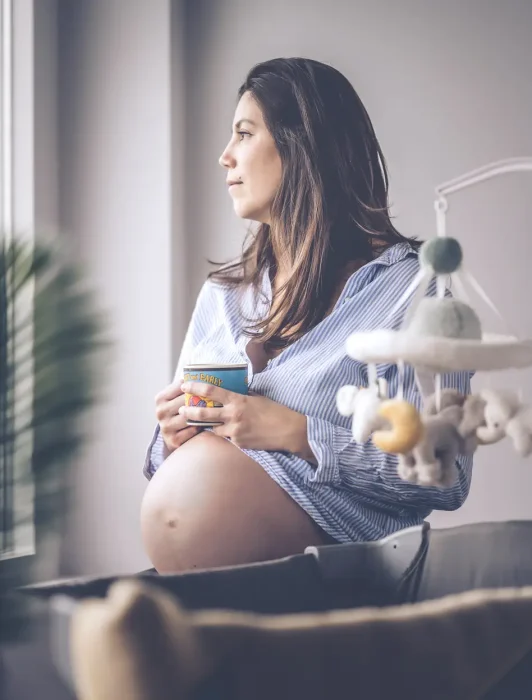
Use everyday gestures instead of formal poses
Some of the strongest images happen between moments that look like posing.
Adjusting a sweater. Opening a curtain. Pouring water. Resting a hand on the lower back without thinking.
In Amsterdam homes, these gestures feel especially honest because they belong to the space. The kitchen is used. The bed is lived in. The window is opened daily.
I often guide gently by suggesting an action rather than a pose. Walk slowly toward the window. Sit and take a breath. Lean here for a moment.
The body responds more truthfully to movement than to instruction.
Include the home without letting it take over
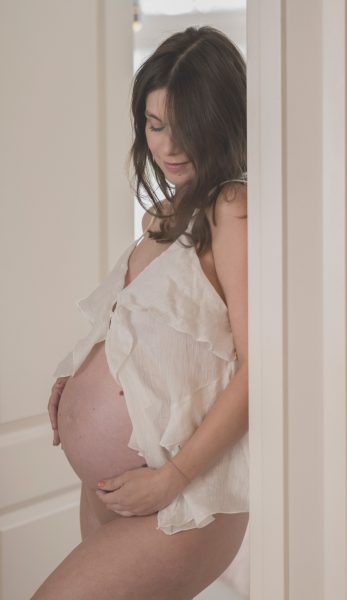
Maternity posing in Amsterdam homes is always a conversation between body and space. The home should support the image, not distract from it.
I look for clean lines first. Walls with texture. Curtains that catch light. Corners that feel calm.
Poses work best when the body has a clear outline against its background. Standing near a window frame. Sitting against a pale wall. Leaning where light separates figure from room.
This is not about styling the home. It is about noticing where it already offers clarity.
When lying down feels right
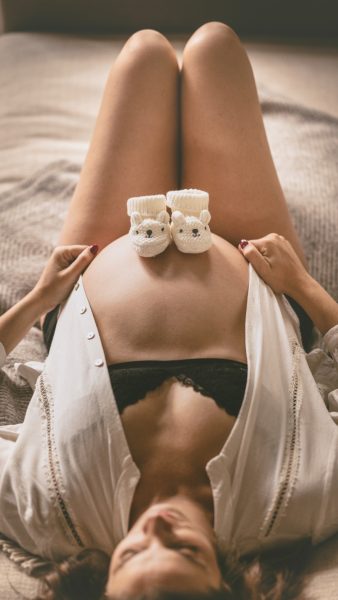
Lying poses can work beautifully, especially later in pregnancy, but only when the body asks for it.
On a bed near the window. On the side rather than flat. Supported by pillows. Breathing slow.
These poses are less about shape and more about rest. Hands resting naturally. Eyes closed or half open. The weight fully given to the surface beneath.
They bring a quiet intimacy that fits well with the domestic atmosphere of Amsterdam homes.
Clothing follows the pose, not the other way around
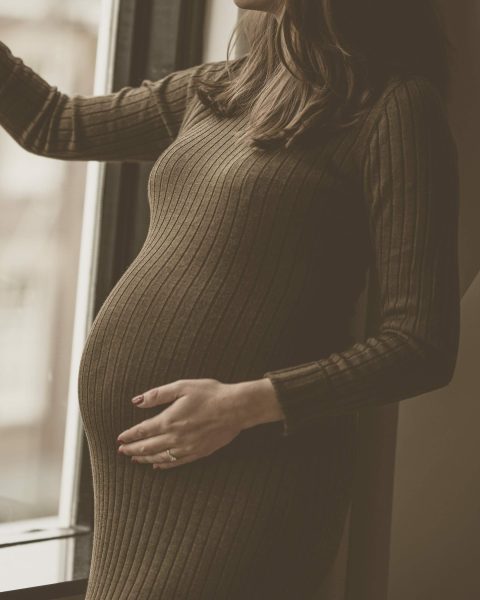
What someone wears influences how they move. At home, clothing that allows movement almost always photographs better than something tight or constructed.
Soft dresses. Knitwear. Loose shirts. Bare feet.
For maternity posing, the goal is not to display the belly but to let it exist. Fabric that moves with the body helps the pose stay relaxed.
I often suggest bringing one or two pieces that feel like home clothes rather than photo clothes. The difference shows.
Trust pauses more than direction
Some of the most meaningful images happen when I stop talking.
After a small adjustment. After a suggestion. After a breath.
Pauses allow people to return to themselves. To forget the camera slightly. To feel their body again.
In a home setting, these pauses feel natural. The environment holds them. The pose softens instead of stiffening.
This is where maternity photography becomes less about posing and more about witnessing.
Why home matters for pregnancy images
Amsterdam homes are not neutral spaces. They are where pregnancy unfolds day by day. Where tiredness shows. Where anticipation settles into routine.
Maternity posing in Amsterdam homes carries that knowledge quietly, shaped by light, layout, and daily rhythm
At OLA LAB, this is why we return to home sessions again and again. They offer depth without effort. Truth without explanation.
You do not need to pose pregnancy into something meaningful. You only need to give it room.