

Olalab Studio | Photography and Visual Storytelling in Amsterdam

When to do a newborn photoshoot: newborn photoshoot timing matters
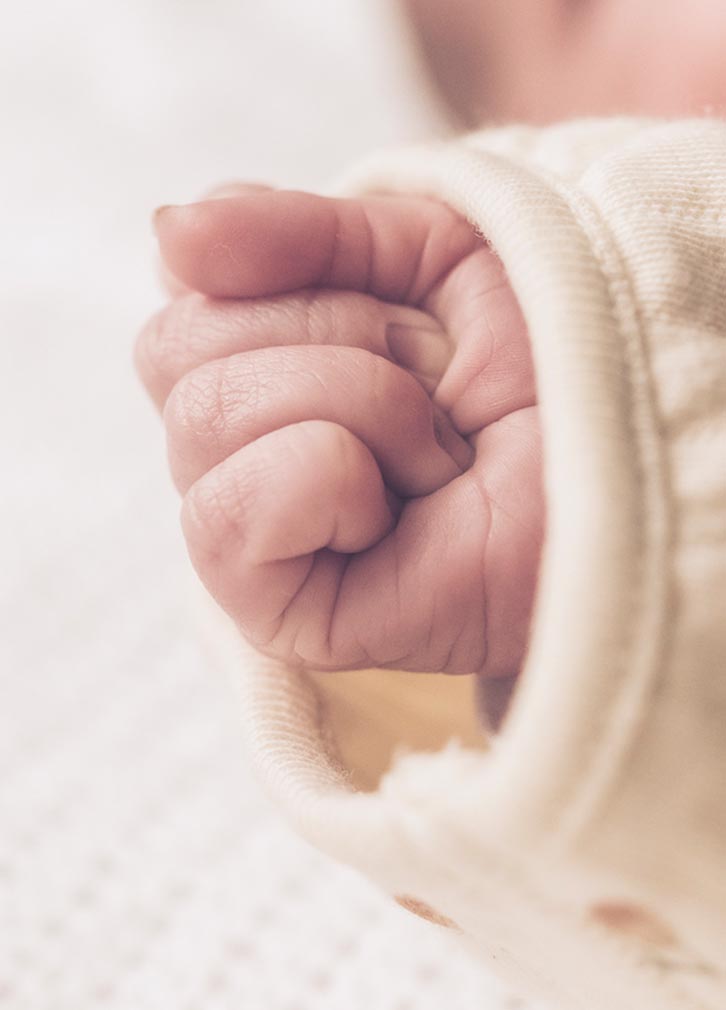
There is a photograph I keep returning to when I think about newborn sessions. A baby sleeping, cheek resting against a parent’s hand, dressed in a warm rust-coloured knit. The light is soft and close. The baby’s lips are slightly pursed, the way they are in those first days when everything about them is still brand new. It is a quiet image. Nothing is staged beyond the gentleness of the moment itself.
That kind of photograph is only possible within a specific window of time. Not because of aesthetics, exactly, but because of what a newborn is like in those early days. Newborn photoshoot timing is one of the most practical things a new parent can think about, and it is worth thinking about before the baby arrives.
The window everyone talks about, and why it actually holds
Most newborn photographers will tell you the same thing: the ideal time for a newborn photoshoot is between five and fourteen days after birth. I would say the same. Not because it is a rule, but because that window reflects something real about how newborns behave.
In the first two weeks, babies spend the majority of their time in deep sleep. They curl naturally, the way they did in the womb. Their limbs fold inward easily. They are not yet alert enough to be unsettled by a camera or a change of setting, and they are not yet at the stage where being moved or handled causes them to startle and cry consistently. That deep, curved sleep is what allows for the kind of close, unhurried photographs that actually capture what a newborn looks like.
After about two to three weeks, babies become more wakeful. That is not a problem in itself, but it changes the session. More time is spent settling, feeding, and waiting for sleep to return. Some of the most characteristic newborn poses become harder to achieve simply because the baby resists the curled position more. A session that might take ninety minutes in week one can stretch to three hours or more by week three. Getting newborn photoshoot timing right really does make a difference to how the whole day feels.
There is also a visual quality to very new babies that changes quickly. The particular softness, the faint newness of the skin, the way they seem folded and compact. It does not last long. By the end of the first month, babies already look different. Not less beautiful, just different.
What happens if you miss the early window
I want to be honest about this: missing the first two weeks does not mean missing the photoshoot. It is not all or nothing.
I have photographed babies at three weeks, four weeks, even six weeks. The sessions take longer and require more patience. The images look different, not worse, just different. The baby is more awake, sometimes more expressive. There are moments of eye contact and alertness that simply do not exist at day eight. Some parents actually prefer that.
What changes is the practicality. Sessions with older newborns are less predictable. You need to build in more time, expect more pauses, and accept that some of the deeply curled poses will not happen. But good photographs are still possible. The connection between parent and baby is still there. The warmth and closeness of those early weeks still shows.
If your baby spent time in the NICU, or if a difficult birth recovery meant the first weeks were not the right time for a session, I would schedule based on your baby’s adjusted age and your own readiness. The emotional state of the parents matters in these sessions. Exhausted and overwhelmed is understandable, but if you are not present, that shows in the images too.
Planning ahead, before the birth
The most common difficulty with newborn timing is not deciding when to schedule. It is forgetting to schedule at all until the baby has arrived.
Newborn photographers often book up quickly, particularly in cities like Amsterdam where there is strong demand year-round. If you arrive home from the hospital and then start looking for a photographer, you may find that the first available slot is already past your preferred window.
I always recommend reaching out during the third trimester, somewhere between week 28 and week 36. You do not need a confirmed date. Most photographers, including at OLA LAB, work with a provisional booking that gets confirmed once the baby arrives. You let me know when the birth happens, and I will find the right slot within that 5 to 14 day window.
This approach takes the pressure off entirely. You are not scrambling in the first exhausting days after birth. The plan is already in place.

How the session itself affects timing
There are two main types of newborn sessions you can find, and they handle timing slightly differently.
Studio sessions, where the baby is posed with wraps, props, and controlled light, are most dependent on the early window. The deep sleep phase is genuinely important here. Posed newborn work requires a baby who is settled, warm, and content to be moved gently between positions. That is most reliably achieved in the first ten to twelve days.
Lifestyle sessions, where I photograph the family in their home environment, are more flexible. The goal is not a posed sleeping baby but rather the texture of life as it actually is: the feeding, the holding, the way a parent looks at a child who is only days old. These sessions work beautifully in the first two weeks but can also work well at three or four weeks. The images are less about the baby alone and more about the relationship forming around them.
The photograph I described at the beginning of this post is from a lifestyle session. A parent’s hand resting against a sleeping baby’s cheek. The rust knit, the white hat, the soft light coming from somewhere nearby. That image required almost nothing in terms of setup. It required a baby who was calm, a parent who was present, and a photographer who was patient enough to wait for the moment to settle.
Light, environment, and what actually matters
I think about light constantly in newborn work. It is one of the reasons I prefer home sessions for lifestyle work. The light in a family’s own home, particularly in Amsterdam where windows tend to be large and the northern European light has a particular quality, is often more interesting and more intimate than anything a studio can replicate.
Either way, the quality of light in newborn photography is inseparable from the quality of the images. Flat, harsh, or artificial light tends to flatten the softness that makes newborn skin so remarkable. Gentle, directional light, whether from a window or a carefully placed studio source, is what allows texture and warmth to come through. That rust-coloured knit in the photograph only looks the way it does because the light is doing its job quietly.
Beyond light, what actually matters in a newborn session is patience and calm. Babies respond to the energy in a room. If there is tension or rushing, they feel it. A good newborn session has a particular pace: slow, quiet, unhurried. That is something worth asking a photographer about before you book. Not just what they shoot, but how they work.
A note on your own readiness
Timing a newborn photoshoot is often discussed entirely in terms of the baby. But parents are part of the session too, and the first two weeks after birth are physically and emotionally demanding.
I would never tell someone they must have a session at day seven if they are not ready. The images include you. They reflect how you were feeling. If you are in pain, overwhelmed, or simply not ready to have someone in your home yet, that is a legitimate consideration.
What I would say is this: if you wait until you feel completely ready, you may wait past the window. There is no perfect moment. Most parents I have worked with say they were tired, a little uncertain, maybe not entirely comfortable in their postpartum body, and that the session was still one of the most meaningful things they did in those early weeks. Not because it was easy, but because it captured something true.
The tiredness shows a little in those images. So does the love. Both are worth keeping.
If you would like to see how a session works or check availability, you can find more here: Book your session
This free guide helps you prepare for your session so you can relax, enjoy the moment, and focus on what truly matters: connection, laughter, and love.
Inside, you will find simple styling tips, ideas for cozy outfits, and suggestions on how to make your baby feel comfortable during the shoot. It is designed to help you arrive calm, confident, and ready to create memories you will treasure for years.
Whether your baby is a few weeks old, already sitting up, or celebrating their first birthday, the guide adapts to your family’s rhythm and stage.