

Olalab Studio | Photography and Visual Storytelling in Amsterdam
What strong light actually does to a photograph
Light is not decoration. It is the thing that makes a photograph feel a certain way before you’ve had time to think about why. Strong light, specifically, does something particular. It separates. It carves. It turns a surface into something with weight and dimension.
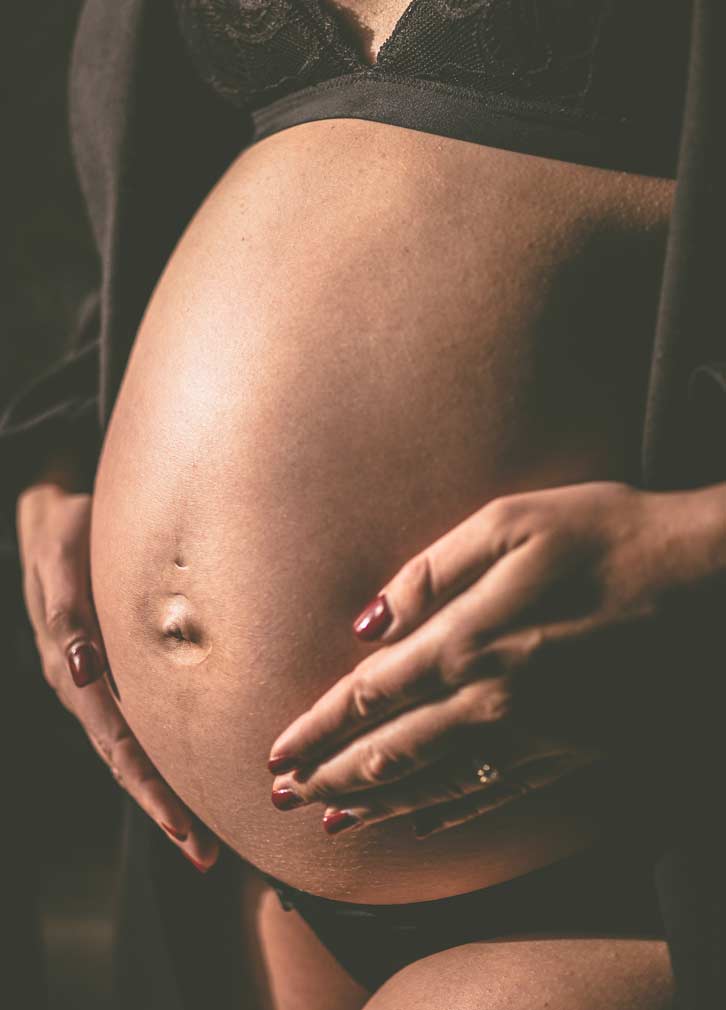
When I look at a maternity portrait made with strong, directional light, I notice what’s in shadow almost as much as what’s lit. The curve of a belly caught in a single source of warm light. The hands resting gently at the sides, fingernails deep red against skin. The way an open robe falls into darkness at the edges while the body holds the light. None of that reads the same way under soft, diffused illumination. It becomes quieter, safer, a little less present.
Strong light photography asks more of a photograph. And when it’s used well, the photograph gives more back.
The difference between harsh and strong
These two words get used interchangeably, and they shouldn’t. Harsh light is strong light used without intention. It flattens or overexposes, creates shadows that feel accidental, draws attention to itself in ways that distract rather than direct. Strong light, by contrast, is deliberate. It knows where it’s going.
In practice, strong light often means a single source. A window with the curtains mostly drawn. A studio strobe positioned to one side. A reflector used to bounce light at an angle rather than fill everything evenly. The key is contrast. Not contrast as a post-processing slider, but contrast as a physical relationship between light and dark within the frame.
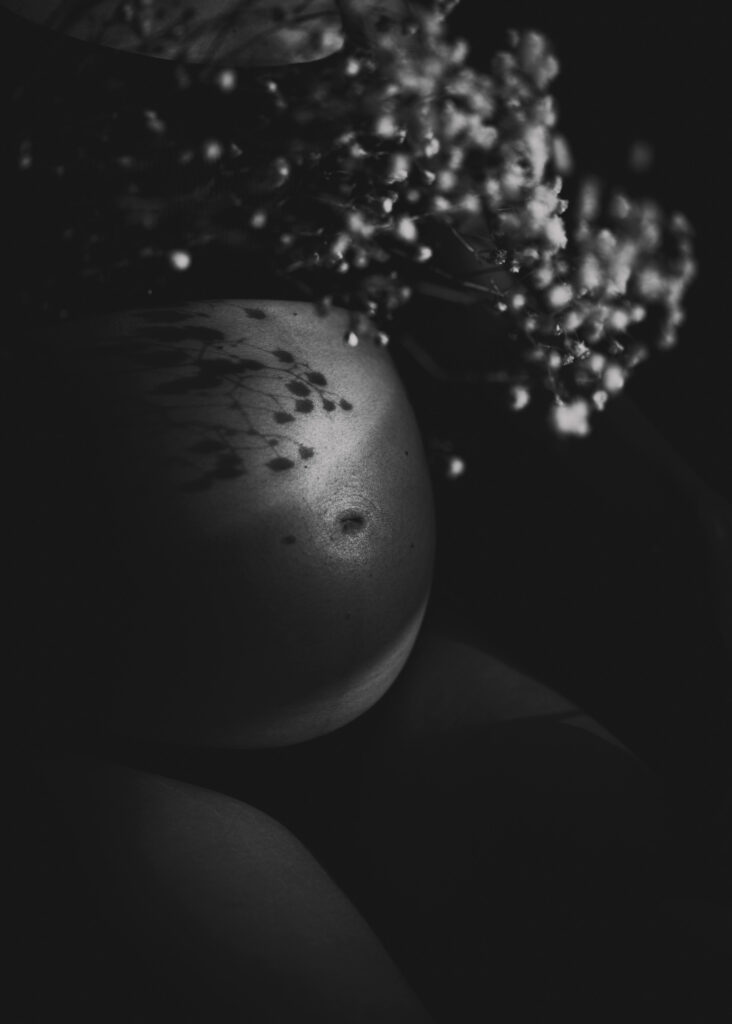
I find that when I’m working with strong light in a maternity session, I’m paying attention to where the shadow falls on the belly. That curve is the subject. The light either honours it or it doesn’t. When the angle is right, the form becomes almost sculptural. When it’s wrong, the whole image feels flat no matter how well everything else is composed.
The image at the top of this post is a good example of the difference. The background is deep, nearly absent. The light source is clearly off to one side, raking across the subject. The result is not harsh. It is strong. Considered. Intentional.
Why maternity photography responds so well to this approach
Pregnancy is a subject that carries a lot of visual weight already. Most people arrive at a maternity session with specific feelings about how strong light photography can honour that, and I think that instinct is right. they want to look, what they want to show, and how they want to be remembered in this particular moment. Often those feelings lean toward softness, toward warmth, toward a kind of tenderness that feels appropriate to the occasion.
And that’s valid. Soft light does beautiful things for maternity portraits. It’s flattering, it’s enveloping, and it suits a lot of people.
But strong, directional light offers something else. It offers presence. It says: this body is here. This moment is real. There is nothing apologetic about this form or this stage of life. When I photograph a pregnant woman in strong light, there is often a shift that happens in the session. Something becomes more grounded. The images stop looking like they are trying to be gentle and start looking like they simply are.
At OLA LAB, we work with both approaches depending on the person, the space, and what the session calls for. But I find myself returning to strong light often, especially when someone comes in wanting images that feel less like a keepsake and more like a portrait. The two aren’t mutually exclusive, but the distinction matters in how we set up the light.
You can see more of how we approach maternity sessions at olalabstudio.com.
How to read the light before you shoot
One of the most useful things I learned early on was to stop and look at the light before touching the camera. Walk around the subject. Watch where shadows fall when you move the source, or when the subject turns. Light behaves predictably once you start treating it as something physical rather than something ambient.
For strong light, I’m looking for a single dominant source. Everything else should be secondary or absent. If I’m working in a studio, I switch off any fill lights and let the main source work alone for a while. If I’m working with available light, I’ll close curtains on the opposite side of the room so the contrast holds.
I’m also looking at the quality of the edge between light and shadow. A hard edge, where light drops off quickly, creates drama. A soft edge, where the transition is gradual, creates depth without as much tension. Both are forms of strong light. The choice between them depends on what the portrait needs.
In the image referenced here, the edge is somewhere in between. Not razor sharp. Not diffused away to nothing. The light catches the skin with warmth and the shadow settles behind and below without announcing itself. That’s a balance that takes some adjusting to find. It doesn’t happen automatically.
What gets lost when everything is evenly lit
Flat light is easy to work in. There are no tricky shadows, no risk of losing detail in the darks, no need to think carefully about where the subject is standing relative to the source. Everything is visible. Everything is equal.
The problem is that equal is not the same as meaningful. When everything in a frame receives the same amount of light, the eye doesn’t know where to go. The subject has to compete with the background, with the environment, with whatever else happens to be in the shot. The photograph becomes a record rather than an image.
Strong light edits for you. It decides what matters by illuminating it. Everything else falls back. In a maternity portrait, that means the belly, the hands, the skin, the quiet gesture of holding something that isn’t yet in the world. The rest can go dark. In fact, it often should.
This is something I think about a lot in the context of maternity photography in Amsterdam, where we tend to work in homes and apartments with variable natural light. Strong light is not always available by accident. Sometimes it has to be made. That might mean repositioning a lamp, masking a window, or using a simple reflector to redirect what’s already there. The effort is worth it.
Preparing for a session with strong, directional light
If someone is coming into a session where I know we’ll be working with strong light, there are a few things I’ll usually mention beforehand.
Wear something that works with shadow. Thin fabrics, open layers, and simple shapes tend to do better than heavily textured or patterned clothing. The image above is a good illustration: a dark lace bra and an open robe. The clothing supports the light rather than competing with it.
Skin texture becomes more visible in strong light, which some people appreciate and others don’t. It’s worth knowing in advance. Moisturising before a session genuinely makes a difference. Not because anyone is trying to hide anything, but because hydrated skin reflects light more evenly and the images will feel more consistent.
Finally, strong light often calls for slower movement and stillness. Soft light can accommodate a lot of action and repositioning. Strong light has a specific zone where everything works, and moving out of it means losing the quality that made the setup worth building. I’ll usually explain this during a session, but it helps to arrive knowing that some moments will involve simply standing or sitting quietly and letting the light do its work.

What a photograph in strong light asks of the person making it
Strong light reveals the photographer’s choices clearly. There’s nowhere to hide. The light source is obvious, the shadows are intentional, and the image either holds together or it doesn’t. Soft, diffused light is more forgiving. Strong light is honest.
I think that honesty is part of what makes it compelling. The images have a quality of having been made rather than taken. Someone decided where the light should fall. Someone chose to let the background go dark. Someone understood that the subject was strong enough to hold that kind of attention.
In maternity photography, I find that the people who respond best to this approach are usually the ones who aren’t trying to look a certain way, but simply want to be seen. That’s what strong light does, at its best. It sees clearly. It doesn’t flatter in the soft, blurring sense of the word. It illuminates, and that turns out to be its own kind of kindness.